






Silicon Carbide Abrasives
Silicon carbide abrasives, an indispensable key material in modern industry, have become a vital support for numerous industries thanks to their unique physical and chemical properties and wide range of applications. From basic abrasive tool manufacturing to high-precision material processing, silicon carbide abrasives have demonstrated their irreplaceable value. This article will provide a detailed analysis of the two main types of silicon carbide abrasives—black silicon carbide and green silicon carbide—and their formation conditions, significant characteristics, and wide-ranging applications, aiming to provide valuable reference and insights for related industries.
Characteristics of Black and Green Silicon Carbide
Black Silicon Carbide
Hardness and Wear Resistance: Its hardness ranks third only to diamond and corundum, exhibiting remarkable microhardness and exceptional wear resistance, making it ideal for maintaining sharpness over extended periods.
High-Temperature Resistance and Oxidation Resistance: Maintains stable physical and chemical properties in high-temperature environments with minimal oxidation susceptibility.
Toughness: Exhibits superior toughness compared to green silicon carbide, capable of withstanding significant impact loads, making it suitable for grinding operations involving substantial impact forces.
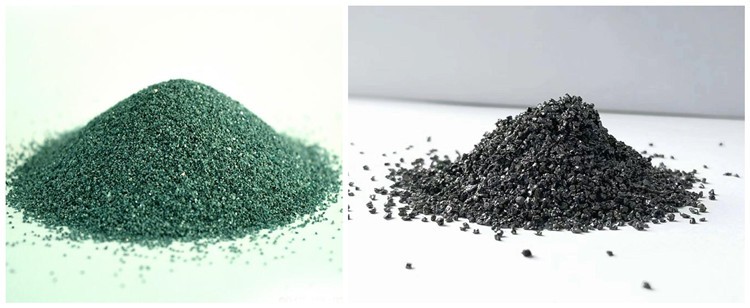
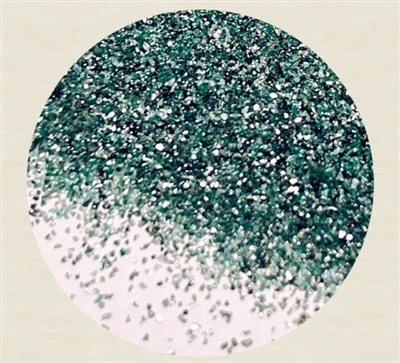
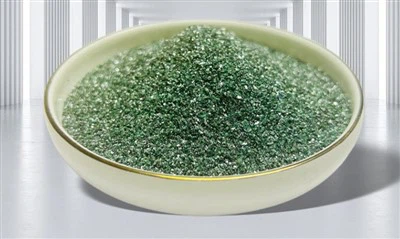
Green Silicon Carbide
Purity and Self-Sharpening: High purity facilitates fragmentation to form new cutting edges, enhancing grinding efficiency.
Thermal Conductivity: Excellent thermal conductivity rapidly dissipates heat generated during grinding, preventing workpiece overheating.
Semiconductor Properties: Its semiconductor characteristics render it vital for cutting and grinding semiconductor materials.




Application Scope of Black and Green Silicon Carbide
Black Silicon Carbide
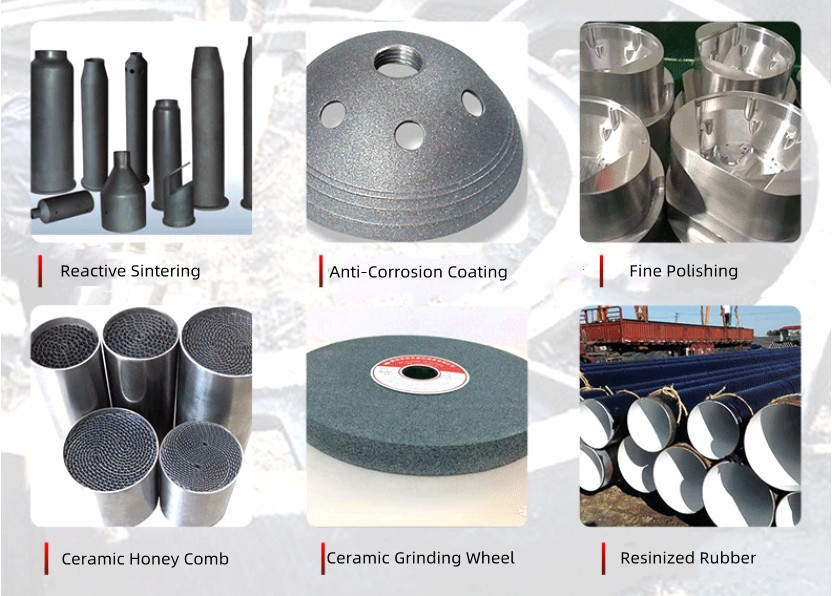
Abrasive Tool Manufacturing: Used in the production of resin abrasives, ceramic abrasives, coated abrasives, etc.
Material Processing: Suitable for machining materials with low tensile strength, such as glass, ceramics, stone, refractories, cast iron, and non-ferrous metals.
Advanced Refractories: Employed in manufacturing high-grade refractories, characterised by thermal shock resistance, compact size, light weight, and high strength.
Other Applications: Utilised in the production of deoxidising agents and silicon carbide rods for electric heating elements.
Green Silicon Carbide
Hard Material Processing: Primarily employed for machining high-precision materials including cemented carbides, titanium alloys, and optical glass.
High-Precision Machining: Utilised in precision applications such as honing cylinder liners and finishing high-speed steel tools.
Semiconductor Materials: Plays a vital role in the cutting and grinding of semiconductor materials.
Other Applications: Employed in fabricating high-temperature silicon carbide heating elements and as substrate materials for far-infrared sources.
In summary, black silicon carbide and green silicon carbide, as the two principal categories of silicon carbide abrasives, each exhibit distinct advantages in their formation conditions, characteristic properties, and extensive application domains. Black silicon carbide, with its high hardness, heat resistance, and excellent toughness, plays a vital role in abrasive tool manufacturing and material processing.
Conversely, green silicon carbide, characterised by its high purity, self-sharpening properties, and superior thermal conductivity, holds a significant position in the machining of hard materials, high-precision processing, and the cutting and grinding of semiconductor materials. With continuous technological advancement and industrial upgrading, silicon carbide abrasives will find increasingly diverse applications, solidifying their pivotal role in industrial manufacturing. Consequently, in-depth research into the properties and applications of silicon carbide abrasives holds profound significance for driving progress across related industries.