



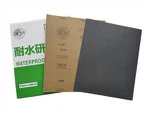


Cutting and Grinding Wheel
What is a Cutting and grinding wheel?
Resin cutting wheel and Grinding wheel are a very common and versatile type of grinding tool.
Primary Application scenarios:
Used for grinding, cleaning, deburring, chamfering, and smoothing welds—not for cutting.
Metalworking: Grinding weld scars, rust removal, cleaning casting burrs, and surface smoothing.
Stone/Concrete: Grinding and cleaning rough surfaces.
Fiberglass/Wood: Grinding and shaping.

Main Applications:
Grinding wheels are primarily used on grinding machines for high-precision machining:
Surface grinding: Grinds flat surfaces to achieve extremely high flatness and finish.
External/internal grinding: Grinds the outer diameters and inner bores of shafts and sleeves to achieve precise dimensions and roundness.
Centerless Grinding: Efficiently grinds large quantities of small-diameter cylindrical parts.
Tool Grinding: Sharpens cutting tools such as drills, milling cutters, and turning tools.
Select the best product you need


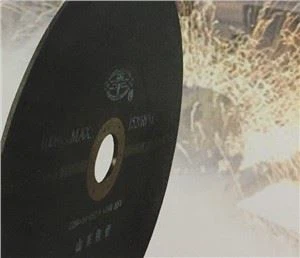

Cutting and Grinding Wheel Safety Usage Guidelines (Critical!)
Resin cutting wheel are high-speed rotating tools; improper use is extremely dangerous.
Wear Protective Gear: Safety goggles, dust masks, and gloves are mandatory. Face shields and protective clothing are recommended.
Inspect Tools: Before use, check the cutting disc for cracks or damage, verify it is within its service life (typically 3 years), and ensure it is securely mounted.
Proper Installation: Use matching flanges and washers. Tighten nuts with a specialized wrench—never over-tighten.
Test Run: After installation, idle for over 30 seconds to confirm no vibration or abnormal noise.
Cutting Angle: Maintain a perpendicular angle between the blade and workpiece. Never grind sideways or use the blade's edge.
Apply Steady Pressure: Allow the blade to cut naturally. Avoid excessive force to prevent jamming or blade failure.
Heat Management: Avoid prolonged continuous cutting to prevent overheating. Exercise particular caution when cutting materials like stainless steel.
Dedicated Equipment Use: Whenever possible, use dedicated cutting machines equipped with protective guards instead of handheld angle grinders for cutting tasks, as they offer higher safety.

Three Elements of a Grinding Wheel
The performance of a grinding wheel is primarily determined by three basic elements:
Abrasive - Equivalent to the cutting edge of a tool, responsible for cutting.
Brown corundum: The most commonly used, with good toughness and low price, suitable for carbon steel and alloy steel.
White corundum: Higher hardness, slightly less toughness, suitable for fine grinding of hardened steel and high-speed steel.
Silicon carbide: Higher hardness, excellent performance, suitable for grinding cast iron, brass, aluminum, stone, carbide, etc.
Grit size - Refers to the size of the abrasive particles.
Coarse grit: Provides a greater grinding depth and high efficiency, but also a rougher surface. Suitable for rough grinding and stock removal.
Fine grit: Provides a smaller grinding depth and a smoother surface. Suitable for fine grinding and sharpening tools.
Hardness - This refers not to the hardness of the abrasive particles themselves, but rather to the firmness of the bond holding the particles.
Hard: Strong bond holding, making the abrasive particles less likely to fall out after being blunted. Suitable for fine grinding and grinding small contact surfaces.
Soft: The bond has a weak holding force, and the abrasive grains tend to fall off easily after being blunted, revealing new sharp grains (i.e., good "self-sharpening"). Suitable for large contact areas, high-efficiency grinding, and grinding soft materials.